Sizing
1X to 5X in inches: how to measure, which number decides and how each cut runs
Plus size letters mean different bodies at different brands, and there is no national standard left to referee. Here is how Eytino maps 1X to 5X onto inches, how to take the three measurements once, which of them decides for each kind of piece, and what the catalogue says about which sizes actually sell out.
15 minute read · sources read 4 September 2026
Start with the piece
Eytino dresses to look at first

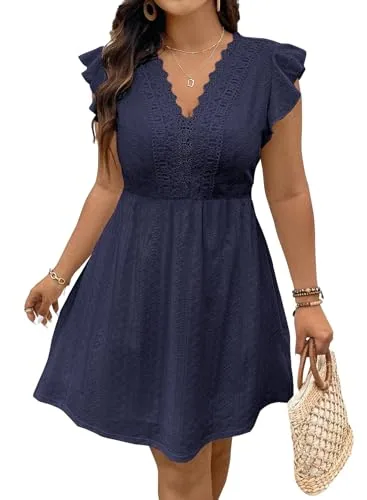
size 3X · lace · cap sleeve
4.2 out of 5 from 692 ratings
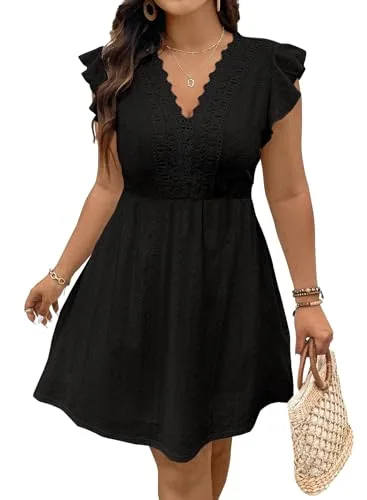
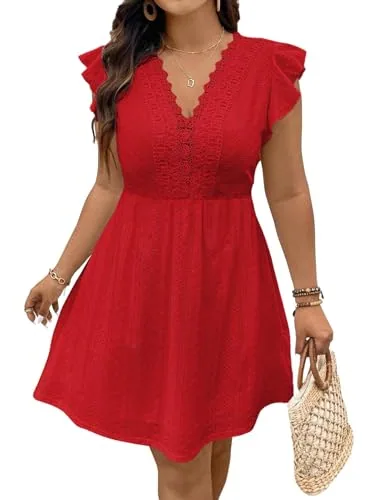
size 4X · lace · ruffle sleeve
4.2 out of 5 from 692 ratings
Why the letters need a table
A 2X at one shop is a 3X at the next, and the letter on the tag is the least useful number in the fitting room. The reason is that plus size letters are not a measurement. They are a label a brand attaches to its own pattern, and each brand's pattern starts from a different body.
The United States used to have a published reference for that body. ASTM International kept a table of measurements for the women's plus figure type, sizes 14W through 32W, and the scope of that document says what it was for:
Although these are body measurements, they can be used as a baseline in designing apparel for female figures in this size range when considering such factors as fabric type, desired ease for body movement, styling, and fit.ASTM D6960-04, scope, read 4 September 2026
The table was withdrawn in 2013 and nothing replaced it. The ASTM page for D6960 now reads "Withdrawn, No replacement", and that single line explains most of the confusion in plus size shopping: every brand grades to its own baseline, and the letters have drifted apart ever since.
So the useful question is not "what is a 3X". It is "what is a 3X at this brand, in inches, and which of my three measurements does the piece care about". This guide answers that for the Eytino range, and the answer travels: a 2X dress and a 2X cardigan here are cut to the same body.
The five Eytino bands and how many pieces sit in each
Counted from the catalogue at the last update. A piece is one size of one colourway, so the count is the number of things you can actually buy in that band today.
| Band | US size | Pieces with a price today | Share of the range |
|---|---|---|---|
| 1X | US 14-16 | 152 | 13% |
| 2X | US 18-20 | 281 | 23% |
| 3X | US 22-24 | 308 | 25% |
| 4X | US 26-28 | 247 | 20% |
| 5X | US 30-32 | 226 | 19% |
The spread is not even, and the reason is on the next table down: sizes sell out at different speeds, and a band with fewer pieces is usually the band that ran out first, not the band we make less of.
Three measurements, taken once
Everything in the Eytino size guide comes back to three numbers: bust, waist and hip, in inches. Take them once, in the underwear you will wear with the piece, with the tape level all the way round and snug without pulling. Write them down. They will do for every piece in the range and for most other brands too, because inches do not drift the way letters do.
- Bust. Around the fullest part of the chest, tape level across the back. Breathe out normally. This is the number a dress, a top, a blouse, a sweater and a swimsuit care about most.
- Waist. Around the natural waist, which is the narrow point above the navel, not where a pair of jeans happens to sit. Do not pull in. This is the number for pants, shorts, skirts and any jumpsuit with a fixed waist.
- Hip. Around the fullest part of the seat with the feet together. This confirms the waist choice for pants and decides for a pencil skirt or a fitted dress.
Two mistakes come up more than any other. The first is measuring over a thick sweater and buying a size too large. The second is holding the tape tight enough to leave a mark, which reads a size too small. The tape should sit on the body the way a fitted tee sits: touching everywhere, pulling nowhere.
The Eytino bands in inches
The US bands are the brand's own words, printed on every page in the catalogue. The inch columns are the ranges we at Eytino grade to.
| Band | US size | Bust | Waist | Hip |
|---|---|---|---|---|
| 1X | 14 to 16 | 42 to 44 | 36 to 38 | 45 to 47 |
| 2X | 18 to 20 | 46 to 48 | 40 to 42 | 49 to 51 |
| 3X | 22 to 24 | 50 to 52 | 44 to 46 | 53 to 55 |
| 4X | 26 to 28 | 54 to 56 | 48 to 50 | 57 to 59 |
| 5X | 30 to 32 | 58 to 60 | 52 to 54 | 61 to 63 |
Where a piece's own page carries the maker's exact figures, the page wins over this table. A woven fabric with no stretch sits at the top of its band. A knit with stretch covers the whole band and a little past it.
Eytino dresses, each with its size ladder
size 3X · lace · cap sleeve
4.2 out of 5 from 692 ratings
size 4X · lace · ruffle sleeve
4.2 out of 5 from 692 ratings
Which number decides
A size chart with three columns invites a three-way argument, and most people lose it by averaging. Do not average. Each kind of piece is held up by one measurement, and that measurement decides. The other two confirm or send you up a band.
Dresses, tops, blouses, tees, sweaters, sweatshirts, swimwear. The bust decides. If the bust lands in 3X and the hip in 4X on an A-line dress, take 3X: the skirt has ease. If it is a fitted dress or a ribbed sweater dress, take the 4X and expect the bust to be easy.
Pants, jeans, shorts, skirts. The waist decides and the hip confirms. On an elastic or drawstring waist the band is forgiving and the hip is the number to trust. On a button fly in stretch denim, the waist is the number, and the maker's stretch claim buys an inch at most.
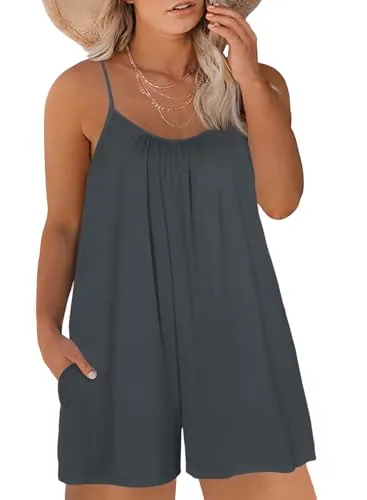
Jumpsuits and rompers. The waist decides where the waist is fixed, and the torso length matters as much as either. No chart has a torso column. Hold the tape from the top of the shoulder, down the front, through the legs and back up to the same shoulder, and compare with the maker's length on the piece's page where it is given. A smocked back forgives an inch. A fixed waist does not.
Two-piece sets. The top decides, because the pants in every Eytino set have an elastic waist and will follow. A set is sold as one size for both halves.
Pieces by department and size today
The same count as the first table, split by department. Read across a row to see where a department is thin.
| Department | 1X | 2X | 3X | 4X | 5X |
|---|---|---|---|---|---|
| Dresses | 20 | 29 | 18 | 23 | 24 |
| Tops & Blouses | 40 | 87 | 85 | 69 | 58 |
| Tees & Tanks | 8 | 23 | 21 | 24 | 17 |
| Sweaters & Sweatshirts | 13 | 25 | 51 | 38 | 33 |
| Cardigans & Jackets | 21 | 33 | 37 | 30 | 41 |
| Pants & Jeans | 22 | 33 | 55 | 35 | 21 |
| Shorts & Skirts | 9 | 20 | 14 | 5 | 12 |
| Jumpsuits & Rompers | 12 | 14 | 15 | 8 | 11 |
| Two-Piece Sets | 3 | 10 | 9 | 10 | 8 |
| Swimwear | 4 | 7 | 3 | 5 | 1 |
A zero in a cell is not a gap in the brand's grading. Every style is graded across all five sizes. A zero means the size has sold out in that department and left the catalogue until it comes back.
How each cut runs
The chart gives the band. The cut decides how the band feels, and that is the part a table cannot say. These are the fit notes the Eytino studio prints on each department page, gathered in one place.
- Dresses. A-line and swing dresses run roomy through the hip. Ribbed and sweater dresses hug the body and rely on stretch, so the bust measurement decides and there is no room to guess.
- Tops and blouses. Peplum and smocked tops are fitted through the bust and free below. Loose and oversized tops are true to the label and forgive a size.
- Tees and tanks. True to size with stretch. An oversized tee is cut long on purpose and sits at the hip.
- Sweaters and sweatshirts. Oversized sweatshirts are meant to be big. Take your usual band for a slouchy fit. Ribbed sweaters fit close.
- Cardigans and jackets. Open-front cardigans run generous and are easy to size down for a closer drape. Button-front cardigans should be picked by bust.
- Pants and jeans. Elastic and drawstring waists run true. Stretch denim with a button fly should be picked by waist measurement, not by habit.
- Shorts and skirts. Elastic waist shorts run true. Tulle and tiered skirts sit at the natural waist and are cut full through the hip.
- Jumpsuits. Smocked-back rompers and elastic waist jumpsuits run true. Fixed waist jumpsuits need the bust and the torso both to fit.
- Sets. Relaxed in both halves. Between sizes, the top decides.
- Swimwear. Close to the body, so between sizes take the larger band. A crisscross back adjusts, a fixed strap does not.
Does a bigger size cost more here
Average, lowest and highest price of the pieces in each band at the last update. Counted from the catalogue, nothing else.
| Band | Pieces | Average price | Lowest | Highest |
|---|---|---|---|---|
| 1X | 152 | $25.93 | $9.49 | $49.99 |
| 2X | 281 | $24.52 | $7.99 | $49.99 |
| 3X | 308 | $24.98 | $7.99 | $49.99 |
| 4X | 247 | $24.70 | $7.99 | $45.99 |
| 5X | 226 | $24.95 | $9.01 | $49.99 |
The averages sit close together, and where they differ the reason is usually which styles are in stock in that band, not a surcharge for size. A single style can still cost a little more in 5X than in 1X, and the ladder on the piece's page shows each size with its own figure.
Reading the ladder on a page
Every Eytino page is one size of one colourway, and under the price sits a ladder: the other sizes of that colourway, each a link with its own price. A band that is missing from the ladder is a band that has sold out in that colourway. It has not been discontinued, and the swatches beside the ladder often show the same cut in another colour with the missing band still in stock.
The ladder is also where the honest price lives. Two sizes of the same dress can differ by a dollar or two, and the figure on the card belongs to the size on the card. If you are choosing between 3X and 4X on a cut that runs roomy, the ladder lets you compare the two figures without opening a second page.
What the ladder does not do is hold the size for you. The button opens the exact piece at our retail partner, and sizes there move on their own schedule. A ladder that shows five bands at noon can show four by evening.
Which sizes are missing from the most colourways
Of the 1066 colourways with a price today, 1 carry all five sizes. This table counts, for each band, how many colourways are missing it.
| Band | Colourways without this size today | Share of colourways |
|---|---|---|
| 1X | 914 | 86% |
| 2X | 785 | 74% |
| 3X | 758 | 71% |
| 4X | 819 | 77% |
| 5X | 840 | 79% |
The band with the most gaps is the band that sells out first. If your size is that band, the practical advice is unromantic: when a piece in your size is on the ladder, it will not wait.
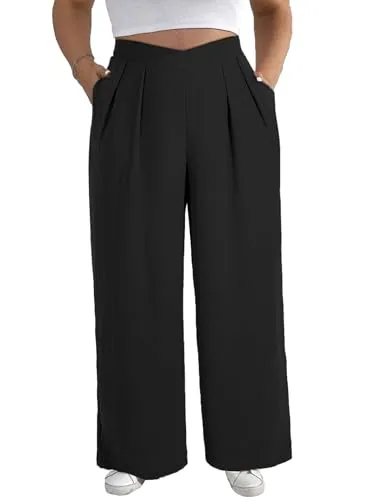
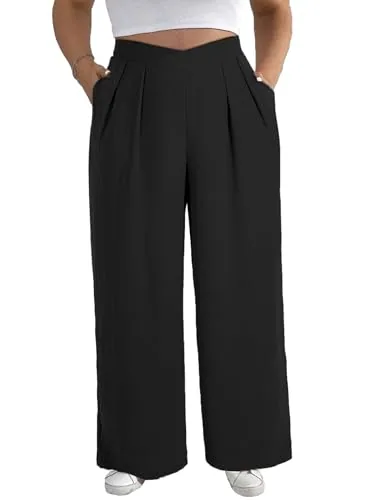
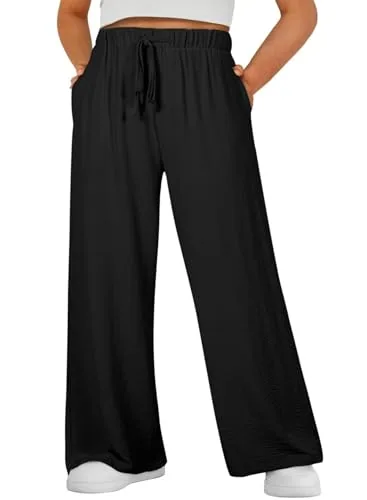
Eytino pants: the waist decides, the hip confirms
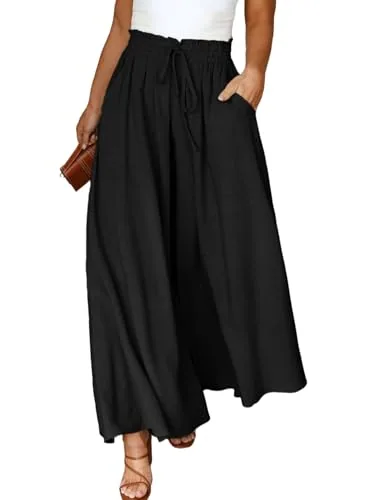
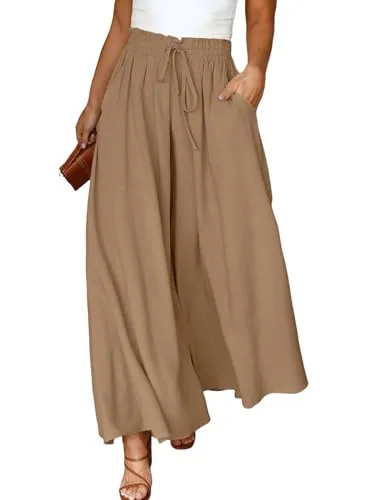
size 2X · elastic waist
4.0 out of 5 from 436 ratings
Pants, in more detail
Pants are where inches earn their keep, and where the letter on the tag misleads most. A Eytino 3X pant is cut for a 44 to 46 inch waist and a 53 to 55 inch hip. Those are the numbers to check, and the maker's inseam on the piece's page is the third.
A wide leg needs the hip number more than a straight leg does, because the leg falls from the hip and a hip that is tight pulls the whole line. An elastic or drawstring waist forgives the waist number and makes the hip the one to trust. A button fly in stretch denim is the reverse: the waist is fixed, and the stretch claim on the page buys an inch, not a band.
Length is the number nobody measures and everybody notices. A wide leg cut for a heel pools on a flat shoe. The inseam where the maker gives it is in the specification, and 30 inches is a common figure for the Eytino wide legs. Measure a pair you own from crotch seam to hem and compare.
Jumpsuits: the torso column that does not exist
People buy a jumpsuit by the waist and return it by the torso. The chart has no column for the distance from shoulder to crotch, and on a one-piece garment that distance is the difference between sitting comfortably and standing all evening.
Measure it with the tape starting at the top of one shoulder, running down the front over the bust, between the legs and back up the spine to the same shoulder. Add two inches for a woven jumpsuit and one for a knit. Compare that with the length the maker gives on the piece's page. If the maker gives no torso length, a smocked back or an elastic waist is the safer buy, because either will absorb an inch.
The Eytino jumpsuits mostly have elastic or smocked backs, and the specification says which. The four below are the ones people rate most.
Eytino jumpsuits and rompers
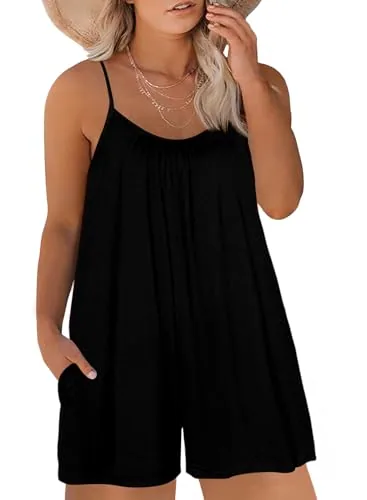
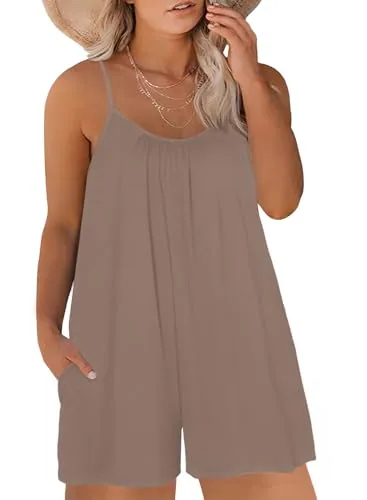
size 3X · sleeveless
4.3 out of 5 from 276 ratings
What to do when you are between bands
Between bands is the normal condition, not the exception, because bands are two US sizes wide. The rule of thumb that survives contact with the range: go up for a woven fabric, go down for a knit with stretch, and go up for anything you will sit in for hours.
A second rule for the Eytino lineup specifically. Oversized is a cut, not a fit correction. An oversized sweatshirt in your usual band is already big; going up makes it a tent. And a peplum or smocked top wants the bust band exactly, because the smocking will do the forgiving below.
Finally, the one thing this guide cannot do. It cannot exchange a size. The piece opens at our retail partner, and sizing exchanges and returns happen there, on that partner's terms. Measuring once, well, is the cheapest insurance against needing them.
Before you go
More dresses in the Eytino range
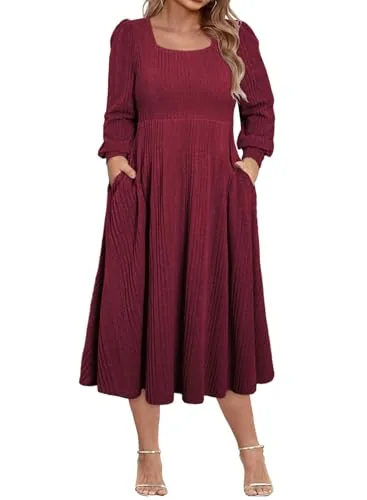
size 5X · ribbed knit · long sleeve
4.3 out of 5 from 275 ratings
size 1X · knit · long sleeve
4.3 out of 5 from 275 ratings
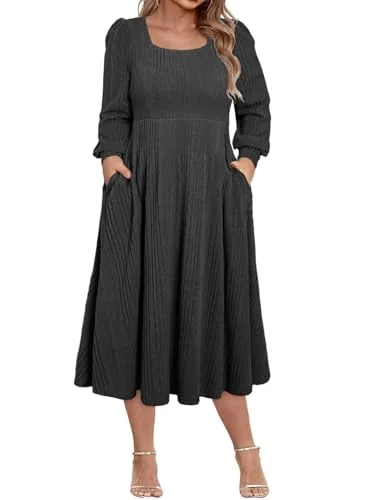
size 2X · long sleeve
4.3 out of 5 from 275 ratings
Sources
- ASTM D6960-04, Standard Table of Body Measurements Relating to Women's Plus Size Figure Type, Sizes 14W-32W (Withdrawn 2013), ASTM International, read 4 September 2026